

What a citation is, and why business directories in Ghana matter
We have all seen local SEO campaigns stall because of a messy digital footprint.
A citation is simply any online mention of your business name, address, and phone number. Directories are the most deliberate kind of citation, and they do two critical jobs. They reinforce the consistency signals Google reads, and they occasionally send real referral traffic directly to your site.
Our team considers this foundational because nearly 70 percent of Ghana’s population is now online. That translates to over 24 million internet users actively searching for local solutions in 2026. This structured approach is exactly the foundation set our Citations & Link Building work builds in month one.
We are going to break down the exact business directories in ghana you need, explain the aggregator ecosystem, and walk through the proper submission strategy.
The tiers that matter
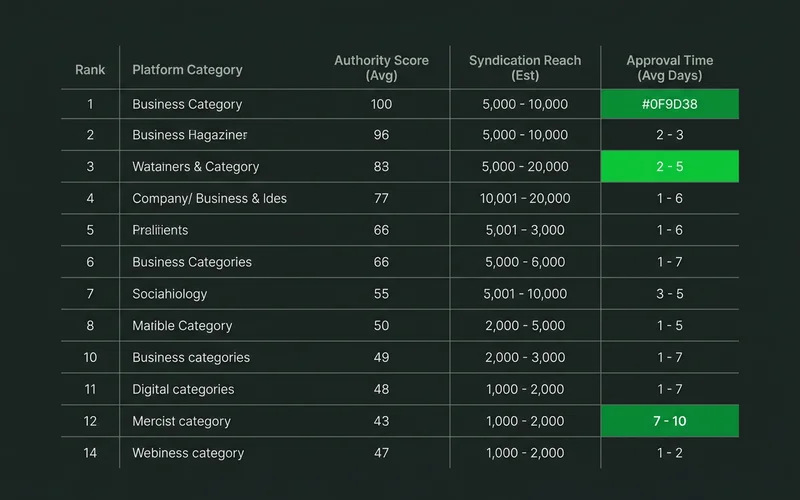
The most effective strategy divides Ghanaian directories into distinct tiers based on traffic and authority. You should focus your initial efforts entirely on Tier one and Tier two platforms.
We prioritize Google Business Profile as the absolute foundation, even though it is not a traditional directory. Everything else simply supports your Google listing. Beyond that, the established general directories carry the most weight because they possess genuine authority and actual human traffic.
Tier one: the essentials
Our standard operating procedure starts with the big players. The core platforms include:
- Google Business Profile: The absolute foundation of your local search presence.
- Ghana Yellow Pages: Features over 35,000 verified companies and acts as a major trust signal.
- BusinessGhana: A massive hub that draws roughly 95,000 monthly visits from people actively seeking services.
- GhanaWeb: Their business listing section provides significant local relevance and search traffic.
Tier two: platforms with local reach
You must also claim your profiles on global platforms that locals use daily. Facebook business pages, Apple Maps, and Bing Places are trivial to complete but frequently skipped by local business owners.
We always secure an Apple Maps profile because it is the default navigation app for iOS users driving around Accra. Foursquare feeds data directly into Apple Maps, making this setup even more critical for reaching affluent consumers and tourists.
Tier three: sector-specific
Target highly relevant niche platforms once the basics are covered. Healthcare directories for clinics, hospitality platforms for restaurants, and trade associations for professional services all send strong relevance signals.
Our data shows these niche listings often carry more weight per submission than a general directory. The specific topical relevance amplifies the SEO signal significantly.
Tier four and zero: everything else and what to skip
Long-tail general directories are useful for completeness in the foundation set, but they offer very little value individually. You should completely skip the low-quality sites that have no traffic, no editorial standards, and thousands of auto-generated pages.
We consider a link from a spammy directory to be a mild liability for your local rankings rather than a benefit.
Data aggregators do the quiet work
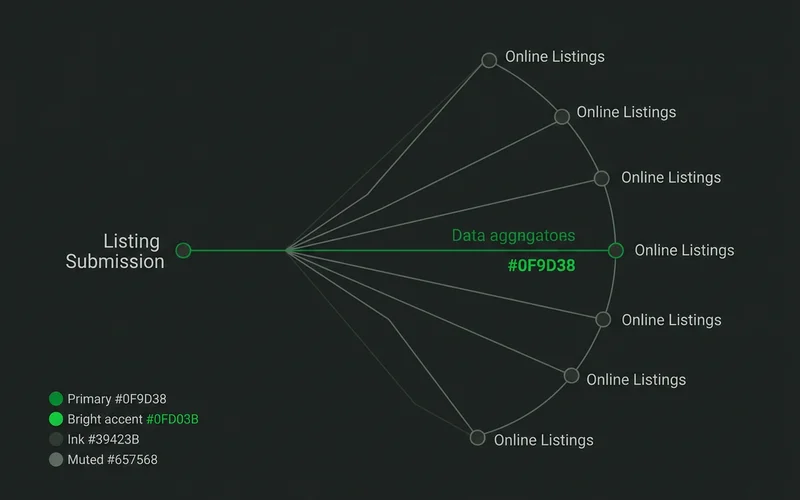
Data aggregators are large distribution companies that automatically feed your business details to hundreds of smaller apps and directories. This is the crucial part of local SEO that most Ghanaian businesses completely miss.
We rely on aggregators because one correct submission propagates to places you would never find manually. Unfortunately, one incorrect record propagates just as efficiently and causes widespread confusion. Getting your data right at the aggregator level fixes listings you have never seen and did not even create.
Our experience reveals this broad syndication is exactly where a surprising amount of Ghanaian NAP inconsistency originates. A major player like Foursquare recently merged with Factual to become a massive global data aggregator. Their Places API now powers location data for Uber, Snapchat, and Apple Maps across Ghana.
We also utilize Data Axle, which pushes information to search engines and in-car navigation systems. Submitting your details to these top aggregators prevents a digital mess where an old phone number circulates across the internet for years.
Before you submit anything
You must agree on your exact formatting before you submit a single listing. Submitting twenty-five listings with three different address formats creates the exact problem citations are meant to solve.
We strictly enforce a single master document approach for all clients. Decide on your exact details, write them down, and never deviate from that file. The core elements include:
- Exact business name matching signage without added keywords.
- One written address format and a GhanaPostGPS digital address.
- A single phone number format using the +233 country code.
- A standard business description of 150 to 300 words.
- Consistent operating hours and a primary category.
Our team loves the GhanaPostGPS system because using a specific code like AK-039-5028 eliminates the confusion of vague directions. Over 7.5 million people have used this system, which divides the country into a precise 5-meter by 5-meter grid.
Using that single document for every submission keeps your profile clean.
Our guide on NAP consistency in Ghana explains why this discipline matters more here than elsewhere.
The most common self-inflicted error
Submitting listings over several weeks, from memory, with slightly different details each time. Write the record once, keep it open, copy from it every time.
Approval times and expectations
Approval times vary wildly, ranging from same-day automated approvals to several weeks for manual reviews. This staggered timeline explains why citation work never shows a sudden step change in your search rankings.
We track these timelines closely so clients know exactly what to expect. Submissions approve on their own unique schedules, and data aggregators syndicate the information long after the initial entry. The cumulative effect appears as a gradual lift across an entire financial quarter.
| Directory type | Typical approval | Notes |
|---|---|---|
| Automated platforms | Same day | Instant, sometimes with later review |
| Major general directories | 2-10 days | Usually manual review |
| Sector-specific | 1-3 weeks | Often verify credentials |
| Data aggregators | 2-6 weeks | Then syndicate onward over months |
| Paid listings | Immediate | Speed is what you paid for |
Data aggregators often take two to six weeks because they run manual verifications to ensure data integrity.
Our preferred software tools like Yext or BrightLocal can speed up updates through direct API integrations. A steady manual approach is often more cost-effective for a single-location business in Accra or Kumasi.
Should you pay?
You should only pay for a listing if you can name a specific, measurable reason for doing so. Do not pay for a directory placement simply hoping it will boost your general SEO rankings.
We advise clients to open their wallets only under specific conditions. Consider paying if:
- The directory genuinely drives referral traffic in your specific sector.
- A premium tier is the only way to include a valuable website link.
- The platform is highly authoritative and requires full business details.
Our testing shows the incremental ranking value of a paid listing over a free one on the same directory is close to zero. A premium placement on a massive site like Ghana Yellow Pages might offer extra visual prominence. Paying fifty dollars to a random low-traffic directory provides absolutely no competitive advantage.
How many is enough
Roughly 25 foundation citations plus the major aggregator submissions will cover your essentials. You can maintain authority with a steady, low-volume monthly drip after establishing that base.
We find that focusing on competitor citation counts matters far more than hitting an arbitrary absolute number. Building 25 high-quality listings gives you a clear data advantage if the top-ranking bakery in your neighborhood only has 15 citations. Going beyond 30 to 40 local citations in Ghana usually results in severely diminishing returns for most local industries.
Our guide on how many citations a Ghanaian business actually needs works through these diminishing returns in detail. Your time is better spent optimizing your Google Business Profile and gathering genuine customer reviews once the foundation is secure. Start by auditing your current presence across the top business directories in ghana today, and correct any major inconsistencies before building new links.